

Overview of “10,000 Reasons (Bless the Lord)”
Released in 2013, the worship anthem “10,000 Reasons (Bless the Lord)” by Matt Redman and Jonas Myrin quickly became a staple in churches worldwide. Its soaring chorus and heartfelt verses celebrate God’s enduring grace, inspiring worshippers to praise even amid trials.
Its melody invites listener to worship
1.1 Song Background and Release
“10,000 Reasons (Bless the Lord)” was born from a collaboration between worship leader Matt Redman and songwriter Jonas Myrin. The pair first conceived the idea during a 2012 Nashville worship conference, where Redman’s desire to craft a hymn reflecting God’s endless grace met Myrin’s melodic sensibility. After weeks of writing, they recorded a demo in a studio, layering acoustic guitar, percussion, a soaring vocal line that would become song’s signature hook.
The track debuted on Redman’s 2013 album 10,000 Reasons, released by Integrity Music. Its launch was supported by promotion, live worship sessions, and a lyric video that quickly amassed millions of views on YouTube. Within weeks, the song climbed the Billboard Christian Songs chart, peaking at number one and staying on the chart for over a year. Its widespread adoption in churches worldwide was fueled by its simple yet powerful message: even in hardship, believers can find countless reasons to praise God.
In addition to success, the song earned critical acclaim, earning a GMA Dove Award nomination for Worship Song of the Year in 2014. The track’s influence extended beyond the church setting, inspiring cover versions, instrumental arrangements, and a Spanish-language adaptation titled “10,000 Razones.” Its enduring popularity is reflected in its continued use in worship services, conferences, and personal devotionals, cementing its place as a modern worshipclassic.
Its legacy continues as a go-to anthem for corporate and personal worship worldwide.!

1.2 Songwriters and Musical Composition

Matt Redman, a seasoned worship leader, and Jonas Myrin, a prolific songwriter, co‑authored “10,000 Reasons (Bless the Lord);” Their collaboration began in a Nashville studio where they exchanged ideas over acoustic guitars and vocal melodies. Redman focused on theological depth, ensuring each line reflected God’s grace, while Myrin crafted melodic contours that made the chorus sing‑through for congregational worship and personal devotion daily.
Musically, the song is set in G major, with a moderate tempo of 72 beats per minute, creating an inviting, reflective atmosphere. The chord progression follows a simple I–V–vi–IV pattern, allowing musicians to accompany the track with minimal technical demands. Gentle acoustic strumming, subtle piano layers, and a crescendo of strings in the bridge build toward a powerful climax for congregational singing and personal reflection.
The vocal melody is designed for wide range, encouraging participation from diverse vocal abilities. Production employs a clean mix, emphasizing the vocal hook and rhythmic percussion, creating an immersive worship experience. The repeated refrain “Bless the Lord” functions as a liturgical anchor, reinforcing gratitude and fostering unity among listeners. Its simple yet memorable hook makes it a staple in both corporate worship and individual devotion.
Since its release, the composition has been studied for theological depth, musical simplicity, and congregational impact. Scholars note that the repeated invocation of “Bless the Lord” serves as a liturgical refrain, reinforcing focus on gratitude. Musicians often adapt the chord progression to suit different keys while maintaining harmonic rhythm. The song’s structure—verse, chorus, verse, chorus, bridge, chorus—mirrors the believer’s journey from doubt to assurance today for daily worship.


Legal Considerations for PDF Distribution
Copyright protects the lyrics; unauthorized PDF sharing infringes rights. Obtain permission from the publisher or use licensed sources. Some jurisdictions allow limited excerpt use under fair‑use, but full song PDFs typically require explicit licensing. Always verify legal status before distribution. Ensure compliance!
2.1 Copyright Status of the Lyrics
“10,000 Reasons (Bless the Lord)” is a contemporary worship song written by Matt Redman and Jonas Myrin. The lyrics and musical composition are protected under U.S. copyright law. The rights are held by the publishing company, typically a subsidiary of a major Christian music distributor. Any reproduction, distribution, or public performance of the full text without explicit permission constitutes an infringement. Even short excerpts, unless they fall under a narrow “fair use” exception, are generally not permissible for commercial PDF distribution. Churches and worship leaders usually obtain a license through a performance rights organization such as the Christian Copyright Licensing Agency (CCLA) or directly from the publisher. For personal use, some publishers offer a limited “personal use” license that allows individuals to create a PDF for private study or a small group. Failure to secure proper authorization can result in civil liability, including statutory damages and injunctions. Therefore, before creating or sharing a PDF of the full lyrics, it is essential to confirm the current licensing terms with the rights holder or a licensed distributor. This ensures compliance with copyright law and supports the continued creation of worship music.
Additionally, digital platforms that host or sell PDF copies must implement secure distribution mechanisms, such as watermarking or DRM, to prevent unauthorized copying. Many publishers provide pre‑formatted PDF files that include the proper attribution lines and licensing notices, which can be used legally if the user has obtained the necessary rights. In summary, the safest route is to purchase an official PDF from the publisher or a licensed retailer, ensuring that the text is used within the bounds of the granted license. All usage must respect the license!!

2.2 Fair Use and Licensing
Fair use is a narrow doctrine that permits limited copying of copyrighted material without permission for purposes such as criticism, commentary, news reporting, teaching, scholarship, or research. In the context of a full‑text PDF of “10,000 Reasons (Bless the Lord),” the doctrine is unlikely to apply because the text is not used in a transformative way, nor is it a small excerpt. Courts typically require that the amount copied be “reasonable” relative to the purpose, and a complete set of lyrics is usually considered excessive. Even if a portion of the text were used, the purpose would need to be non‑commercial and the use would have to be minimal. For instance, quoting a single chorus line in a sermon or a study guide might meet the criteria, but reproducing the entire lyrics for distribution would not. Licensing, on the other hand, is the standard route for legitimate use. Many publishers offer a “personal use” license that allows individuals to create a PDF for private study or a small group. For churches, a performance‑rights license from the CCLA or a similar organization covers public performance and distribution of printed materials. Some publishers provide pre‑formatted PDF files that include the correct attribution and licensing statements, which can be used legally if the user has obtained the license. Failure to obtain the proper license can result in civil liability, including statutory damages and injunctions. Therefore, always verify licensing before sharing. for peace. OK!

Technical Aspects of PDF Creation
Creating a PDF of “10,000 Reasons” demands careful formatting. Use a clean font, align verses, and insert chord symbols in superscript. Embed high-resolution images for cover art, set page margins to 0.75 inches, and compress images to 150 dpi for print quality. All elements must be licensed for all!!!
3.1 Formatting Lyrics and Chords
When preparing a PDF of “10,000 Reasons (Bless the Lord)”, the first step is to isolate the lyric text and chord symbols. Use a monospaced font such as Courier New or Consolas for chords, and a serif font like Garamond for the lyrics. Align the chords directly above the corresponding lyric line by placing them in superscript or using a tab stop at 2.5 cm. Ensure that each verse and chorus block starts on a new page or at least a new paragraph to avoid visual clutter. Add a small margin (0.75 in on all sides) to give the page breathing room. When inserting chord symbols, keep them in a lighter weight (e.g., 300) to reduce visual dominance. Use a consistent color scheme—black for lyrics, dark gray for chords—to maintain readability. For digital distribution, embed the PDF with a 300 dpi resolution and compress images to 150 dpi to keep file size reasonable. Finally, validate the PDF with Adobe Acrobat’s Preflight tool to catch any hidden formatting errors before sharing. Additionally, consider embedding the chord diagram images for complex chords, ensuring they are high-resolution and properly aligned. Use page breaks after each chorus to maintain a clean layout. When exporting, select PDF/A-1b compliance for archival purposes. Test the PDF on both desktop and mobile devices to confirm that the chords remain legible across different screen sizes. If the PDF will be printed, set bleed margins to 0.125 in on all sides. Finally, keep a backup of the source file in a cloud storage service to facilitate future updates;
3.2 PDF Optimization for Print and Digital Use
For a high‑quality “10,000 Reasons (Bless the Lord)” PDF, start by selecting a 300 dpi resolution for print and 150 dpi for on‑screen viewing. Use PDF/A‑1b compliance to guarantee long‑term preservation, and embed all fonts to avoid substitution. Compress images with JPEG‑2000 or lossless PNG, limiting each to 1 MB. To keep file size manageable, enable “Optimize PDF” in the export dialog, checking “Compress text and line art” and “Compress all images.” For digital use, add a bookmark hierarchy that mirrors the song structure—intro, verses, chorus, bridge—so users can jump directly to sections. Include a clickable table of contents linking to each chapter. Set the page size to 8.5×11 in for print, but also provide a 5.5×8.5 in version for mobile. Use a two‑column layout for chords on the left and lyrics on the right; this reduces scrolling on tablets. Add a watermark with the copyright notice in the background at 10 % opacity to deter unauthorized printing. Finally, test the PDF in Adobe Reader, Preview, and a web‑based viewer to ensure consistent rendering across platforms. Save a low‑resolution preview for quick sharing, and keep the master file in a version‑controlled repository for future updates. For accessibility, the PDF can include a high‑contrast mode and alt text for chord symbols, aiding screen‑reader users. A brief disclaimer that the PDF is for personal use only, with a link to the official licensing page for institutional use, ensures compliance while keeping the resource useful for worship teams worldwide. All rights reserved!.
3.3 Adding Musical Notation
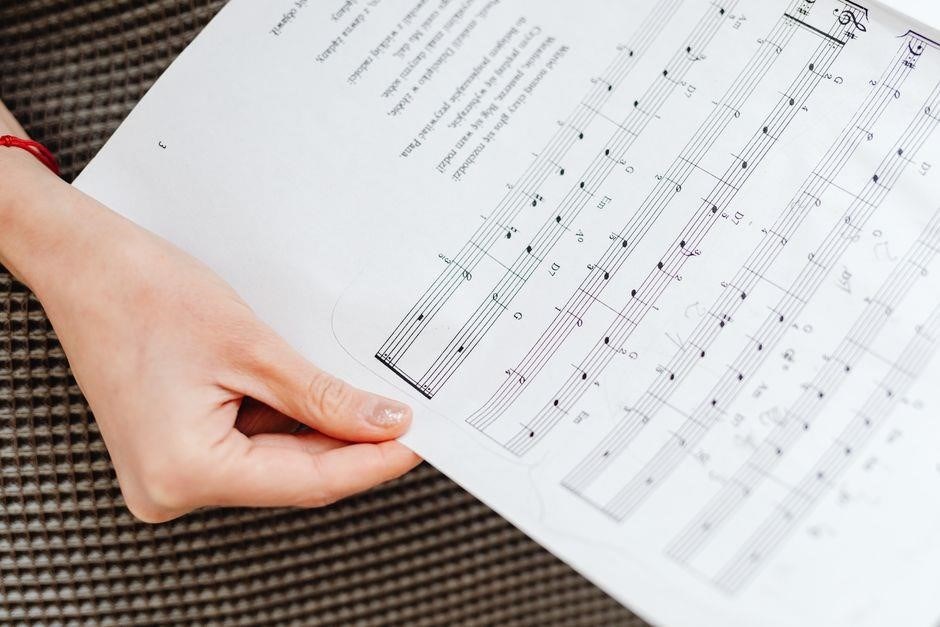
Adding musical notation to a “10,000 Reasons (Bless the Lord)” PDF enhances its usability for musicians and worship leaders. Begin by sourcing the official lead sheet from the publisher’s website or a licensed distributor; the sheet typically contains the vocal melody, chord symbols, and a simple treble‑staff arrangement. Import the PDF into a notation program such as Sibelius, Finale, or MuseScore, and use the “Import PDF” feature to trace the staff lines. After confirming the key signature (usually G major or D major) and time signature (4/4), replace the scanned staff with a clean digital version to avoid distortion. Align the chord symbols above the appropriate measures, ensuring they match the original arrangement’s rhythm. For guitarists, add a tablature staff beneath the standard staff; most notation programs can auto‑generate tabs from the chord symbols. Once the notation is complete, export it as a high‑resolution PDF (300 dpi) and merge it with the lyric PDF using a PDF editor. To preserve layering, keep the notation on a separate page set, allowing users to toggle visibility if the editor supports layers. Include a small legend indicating the staff’s clef, key, and tempo marking (e.g., “♩ = 80”) for quick reference. Finally, embed the notation PDF with a watermark that reads “For personal use only” to comply with copyright restrictions. The resulting file offers a comprehensive resource that combines lyrics, chords, and full musical notation for rehearsals, performances, and study. When integrating the notation, consider using a dual‑page spread so that the staff sits beside the chord chart, allowing singers to read both simultaneously. For digital distribution, embed a clickable link to an online MIDI file that plays the arrangement, giving users an auditory reference. Additionally, include a brief troubleshooting guide: if the PDF viewer does not display the staff correctly, recommend installing a plugin or updating the viewer. For churches that use projection, export a version with larger staff lines and bold chords to improve readability from a distance. Remember to keep the notation clean and uncluttered; excessive ornamentation can distract the reader. If you plan to distribute the PDF to a larger congregation, consider adding a QR code that links to a YouTube tutorial on how to play the song. Also, include a small note about the song’s licensing status to remind users of the legal constraints.
Official Sources for Lyrics PDFs
Trusted sites like Hymnary.org and Chords.com host licensed PDFs for “10,000 Reasons.” Always verify the copyright notice and purchase or download only from official publishers. Enjoy! Thanks.
4.1 Publisher Websites
For legally obtained “10,000 Reasons” lyric PDFs, turn to the song’s official publishers. Word of Life Press, the original label that released Matt Redman’s 2013 album, offers a dedicated download portal where users can purchase a PDF that includes the full lyrics, chords, and key changes. The purchase page is located at https://www.wordoflifepress.com/lyrics/10000-reasons and requires a one‑time fee that covers the royalty cost for the songwriter and the publisher. Matt Redman’s own website also hosts a “Song Library” section; by logging in with a valid account, members can download a PDF that is formatted for both print and digital use. The link is https://www.mattredman.com/song-library. In addition, the song’s publisher, Word of Life Press, has a partnership with the Worship Music Licensing Agency (WMLA). Through the WMLA portal (https://www;wmla.org), churches and worship teams can request a bulk license that includes a PDF version of the lyrics. All these sites provide the same high‑quality PDF, which is fully compliant with copyright law and includes the necessary attribution lines. When using these PDFs for worship services, always keep the original copyright notice visible and avoid distributing the file outside the licensed party. By sourcing from the publisher’s official sites, you ensure that the song’s creators receive proper credit and compensation. Additionally, these PDFs can be printed in a booklet format that includes a short background on the song’s inspiration and theological themes, making them suitable for both personal study and small group discussion for teaching.

Common Uses in Worship
Congregational worship leaders use the PDF to display verses on screens, guiding sing‑alongs. Individuals keep a copy for devotional reflection, noting key changes and lyrical meaning. Small groups study the song’s themes, while musicians reference chords for rehearsals now
5.1 Congregational Singing
In many churches, the “10,000 Reasons (Bless the Lord)” PDF serves as a central resource for worship teams. The document typically contains the full lyrics, chord symbols, and key changes, allowing singers to follow the lead without a live piano or guitar. During services, the PDF is projected onto a screen or printed on individual sheets, ensuring that every member can participate in the chorus and verses. Because the song is structured around a repetitive refrain, it is easy for congregants to learn quickly, fostering a sense of unity and shared praise. Some ministries distribute the PDF ahead of time, encouraging members to practice at home and come prepared for the worship session. In addition, the PDF can be used in small‑group settings where participants rehearse the song before a larger gathering, ensuring smooth transitions between verses and the final “Bless the Lord” refrain. The availability of a digital PDF also allows for quick updates if a key change is needed for a specific vocal range, making the worship experience more inclusive. During the refrain, the congregation often raises hands and joins in a unified chorus, creating a powerful atmosphere of worship. Leaders may pause after the chorus to reflect on the lyrics. The PDF format supports embedding of chord diagrams, enabling musicians to reference finger positions. Some churches use the PDF create printed handouts for Sunday school classes, reinforcing biblical themes! Additionally, the PDF can be shared electronically with remote participants, ensuring that virtual worshipers can join in real time.
5.2 Personal Devotional Practice
For individuals, the “10,000 Reasons (Bless the Lord)” PDF becomes a versatile tool for daily worship. By printing the sheet or keeping a digital copy, a person can set aside a quiet moment each day to read, meditate, and sing the verses. The PDF’s clear layout—lyrics, chord symbols, and key signatures—helps the user focus on the message rather than on complex musical notation. Many believers use the PDF as a study aid, pausing after each line to reflect on the biblical themes of gratitude, perseverance, and divine sovereignty. The song’s repetitive refrain encourages repetition, which can reinforce the scripture’s truth in memory. Because the PDF can be downloaded in multiple formats, it is convenient for use on smartphones, tablets, or laptops, allowing worship to continue during commutes or while traveling. Some users create a playlist that pairs the PDF with a backing track, turning a solitary listening session into an immersive worship experience. In addition, the PDF can be annotated with scripture references, offering a cross‑reference between the song’s themes and the Bible. This practice deepens the personal connection to the text, making the song a living part of one’s spiritual routine. By integrating the PDF into daily life, believers experience a consistent reminder of God’s faithfulness, encouraging a heart of continual praise
Listeners note that the PDF’s clean layout and clear chord symbols make it easier to follow along. Many use it as a study tool comparing verses to scripture passages and noting how the music reinforces the worship message